EZLynx
 Outlook
 Claude
The situation
There are about 37,000 independent insurance agencies in the United States, with fewer than ten people on average. In most of them, the owner is also the licensed agent who advises clients, and the busiest moments rarely arrive during office hours.
Home buying is one of those moments. Existing homes were selling at an annual pace of 3.98 million in August 2026, and when a buyer has a mortgage, the lender wants proof of insurance before closing: the policy details, its mortgagee clause and the loan number. Lenders set their own cut-off. Miss it, and the closing can move.
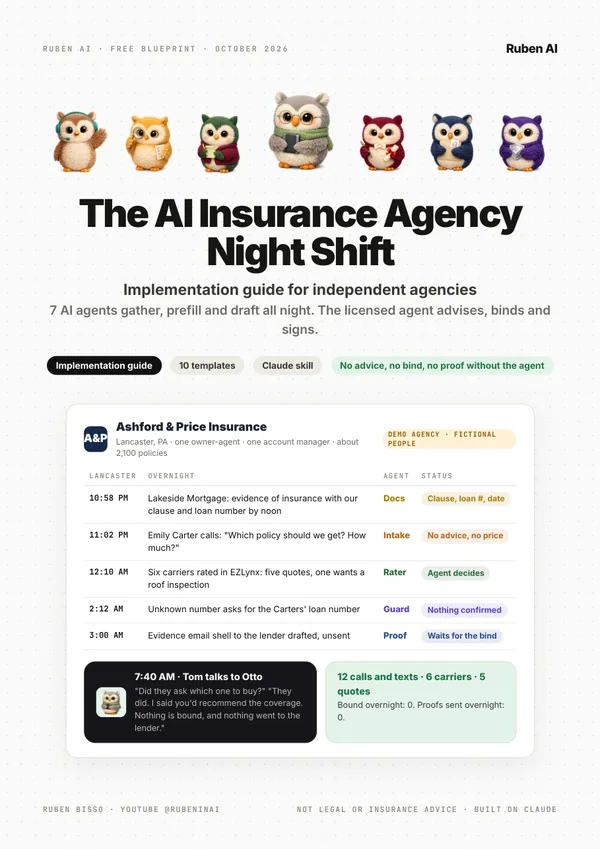
In this demo, that request lands at 10:58 PM on a Monday. Emily and Josh Carter close on their first home in Lititz on Friday. Their lender, Lakeside Mortgage, wants the evidence of insurance by noon on Tuesday. The agency is closed. Tom Ashford, the owner and licensed agent, is asleep.
How the night used to go
At a small agency, a request like this usually starts as a voicemail. The next morning someone listens to it, calls the buyers back, asks them to forward the lender's email, types the house into the rater, waits for the carriers, and only then can the agent talk to the family about coverage. The proof goes out late in the morning, close to the cut-off, often after a second call from the lender's processor.
None of that work is the agent's real job. The real job is the twenty minutes on the phone, explaining the options and recommending the coverage. Everything around it is gathering, typing and chasing, and it all happens in the hours when the agent should be advising.
The agents
Seven agents, each with one job and a written rulebook, all working inside the agency's own tools. Otto leads the night; the other six are specialists.