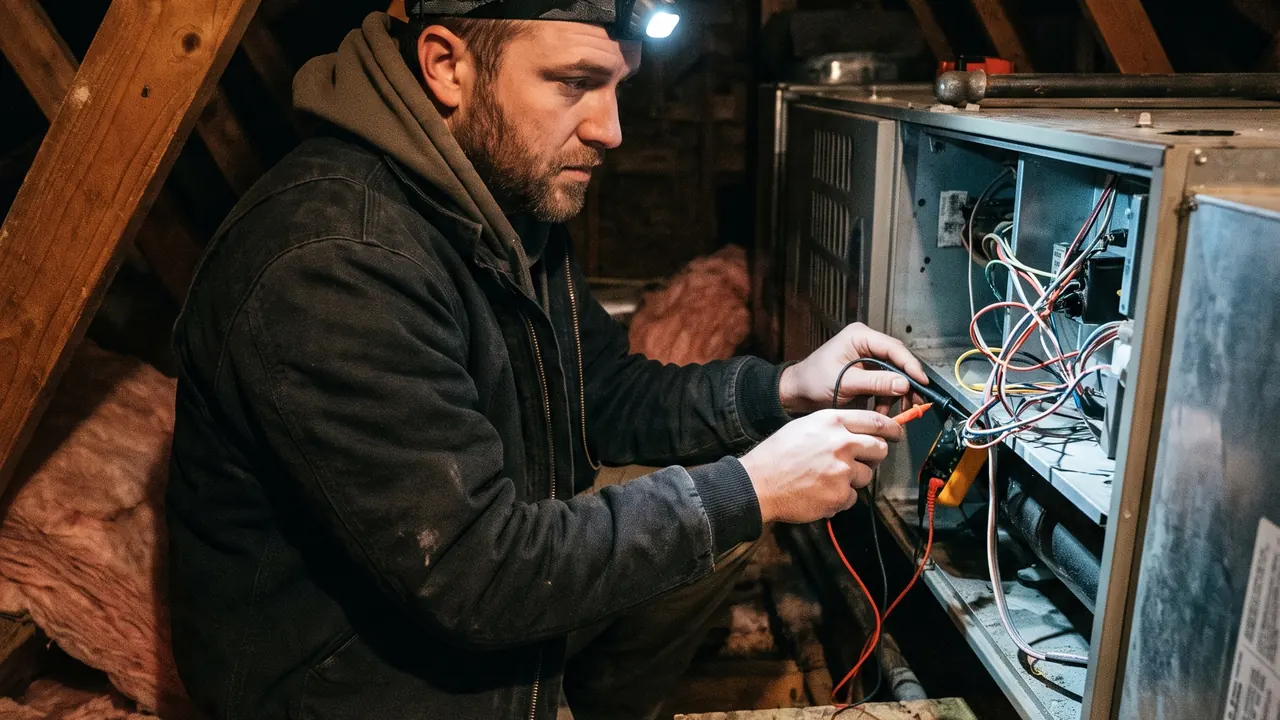
Case studyExample business, real tools, estimated numbers

Seven AI agents run a law firm's intake through the night

In this case study, seven AI agents run the after-hours intake of a small personal injury firm in Tampa, Florida. A woman calls at 11:40 PM, twenty minutes after a truck ran a red light and hit her car. The agents answer, say they are AI, gather the facts, check conflicts in Clio and write the attorney a one-page memo. The attorney decides at 8 AM, and the client signs the agreement at 8:41 AM.

The video loads from YouTube only when you press play.

Business
Bayline Injury Law, a personal injury firm in Tampa, Florida
Size
An attorney who owns the firm, a paralegal, and leads from ads and referrals
The night
11:40 PM to 8:41 AM
Agents
Seven: Otto, Reception, Intake, Conflicts, Engagement, Records and Follow-up
Tools
Lawmatics Clio CallRail Claude
Build time (estimate)
About three weeks, then the AI officer plan
8:41AM
client signed, nine hours after the crash (from days, after a morning callback)
One night
8AM
one-page memo on the attorney's desk (from scattered notes and a callback)
Estimated
0
legal advice, promises or agreements sent overnight
By design
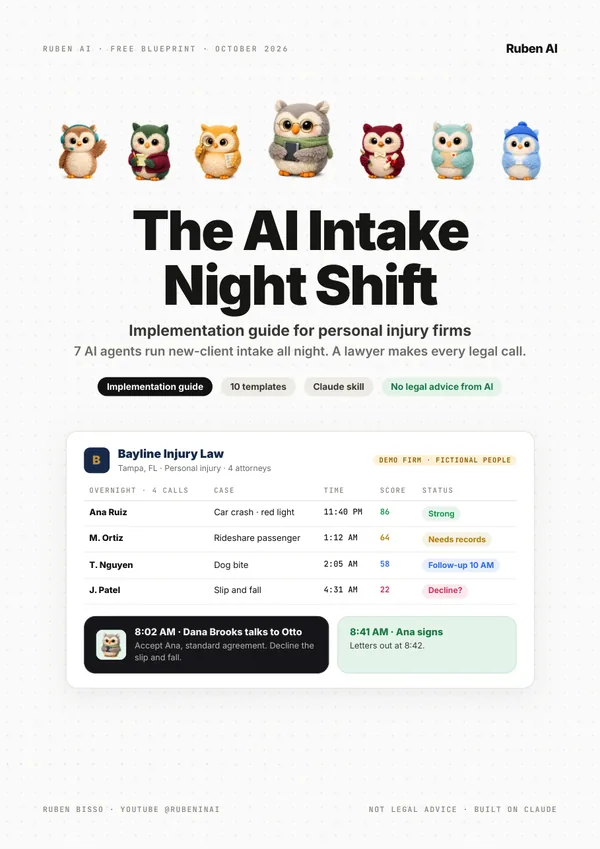
Cover of the guide: The AI Intake Night Shift

Free guide · PDF · 78 pages

The AI Intake Night Shift

Implementation guide for personal injury firms: the seven agents with their build specs, the rules, the rollout and the templates.

The situation

For a small injury firm, the first call decides a lot. In Clio's 2024 secret-shopper test, only 40% of law firms picked up the phone when a prospect called, and 48% could not be reached at all, even after a message was left. Martindale-Avvo found that more than 80% of people looking for a lawyer call another one if they hear nothing within 48 hours.

And crashes do not keep office hours. In 2024, 36% of US crash deaths happened between 9 PM and 6 AM, according to the Insurance Institute for Highway Safety. The calls that matter most often come when the office is dark.

In this demo, Ana Ruiz calls Bayline Injury Law at 11:40 PM. A pickup ran the red light at Dale Mabry and Kennedy and hit her car twenty minutes ago. The police are there, her neck hurts, and the gas station on the corner has cameras. The firm's only attorney, Dana Brooks, is asleep.

How intake used to go

At most small firms, a call like this reaches voicemail or an answering service that takes a name and a number. The next morning someone calls back, asks the same questions again, runs the conflict check by hand and types a few notes for the attorney. By the time an agreement goes out, the caller has often spoken to two other firms. Meanwhile, the gas station's camera footage may be recorded over.

The attorney's real work is the judgment: is this a case, should we take it, what does the client need to hear. The hours around it are gathering, checking and chasing.

The agents

Seven agents, each with one job and a rulebook written with the attorney. Otto leads the night; the others are specialists working inside the firm's own systems.

OttoLead

Runs the night, keeps the log, and briefs the attorney by voice at 8 AM.

Never decides to take or refuse a case.
Reception

Answers every call, says it is the firm's AI assistant and that the call is recorded, and asks about safety first.

Never gives legal advice or says whether there is a case.
Intake

Gathers the facts as the caller speaks, opens the file in Lawmatics, and writes a one-page memo with the filing deadline worked out.

Never promises a result or a fee.
Conflicts

Checks the caller and the other driver against every client, opposing party and past matter in Clio.

Never clears a possible conflict on its own; it flags it.
Engagement

Prepares the fee agreement. It goes to the attorney to sign first, then to the client with the medical authorization.

Never sends an agreement the attorney has not approved.
Records

Drafts the letter of representation, the request to preserve the camera footage and the medical records request.

Never sends a letter before the client has signed.
Follow-up

Texts the next steps to people who said yes, files their photos, and tracks which ad or referral became a signed case.

Never contacts anyone who did not reach out first.

Step through the night

Press play, or tap any time, to follow the call from the crash to the signature.

One night
11:40 PM
Reception

Ana calls from the side of the road. The AI answers and asks about safety before anything else.

ReceptionI'm so sorry. You've reached Bayline Injury Law, after hours. I'm the firm's AI assistant, and this call is recorded. First, are you safe? Do you need an ambulance?
1 / 9

The stack

The firm keeps its systems. The agents read and write where the team already works, so the attorney sees everything in the usual place.

Lawmatics, intake and e-signature Clio, matters and conflicts CallRail, call tracking Claude, the agents
  • Lawmatics holds the intake file. Intake writes into it during the call, and the agreement is signed from it.
  • Clio holds every client and past matter. Conflicts searches it overnight, and the signed agreement is filed there.
  • CallRail knows which ad or listing made the phone ring. Follow-up joins that to the signed case, so the firm sees cases per ad, not calls per ad.
  • The phone line forwards after-hours calls to Reception, which always says it is an AI.

Before and after

MomentBefore (typical)With agents
Call at 11:40 PMVoicemail or an answering service takes a messageAnswered, AI disclosed, safety first, facts gathered
Conflict checkRun by hand the next dayDone overnight against every client in Clio
The attorney's first lookScattered notes and a callbackA one-page memo at 8 AM
AgreementSent after the callback, signed days laterSigned at 8:41 AM
EvidenceFootage request goes out days laterPreservation request the same morning, once she signed
MarketingCalls counted, cases notWhich ad became which signed case
Before: a typical small-firm intake, estimated. With agents: the night in this case study.

The value, and how we estimated it

Counted in hours and outcomes, with each assumption written out so you can redo the math with your own firm's numbers.

ValueEstimateHow we estimated it
Attorney and staff hours backabout 250 a yearAbout 5 hours a week of callbacks, repeated questions, manual conflict checks and memo writing, over 50 working weeks.
First call to signed agreementabout 9 hours11:40 PM call and 8:41 AM signature in this case study, against several days with a morning callback.
After-hours calls reachedall of themCalls go to Reception instead of voicemail. In Clio's 2024 test, 40% of firms picked up.
Evidence requestedthe same morningThe preservation letter is drafted overnight and sent once the client has signed.
Estimates, with every assumption shown.

How a build like this would run

Estimated for a firm of two to ten people that uses Clio, an intake system like Lawmatics, and call tracking.

  1. Week 1

    Map

    Listen to recorded intake calls, read the intake form and the decline letters, write the screening questions with the attorney. Agree on the result, for example: every call answered, and every strong case memo on the attorney's desk by 8 AM.

  2. Weeks 2 to 3

    Build

    Reception and Intake first, on the after-hours line only. Then Conflicts and the memo. Engagement and Records come last, because they send things out, and only after the attorney approves.

  3. Day 30

    Prove

    Measured from the firm's own call logs and intake system: calls answered, memos ready, time from first call to signature.

  4. Every month

    Stay

    A report of calls, cases and sources, rule updates when the bar issues new guidance, and one improvement a month.

What stays with the people

The AI answers, gathers and drafts. A lawyer decides, signs, and gives the advice.

No legal advice from the AIFlorida's bar says an intake chatbot must disclose it is an AI, not a lawyer, and must not give legal advice (Ethics Opinion 24-1).
The attorney takes the caseConflicts are checked first; the decision to accept or decline is the attorney's.
The agreement is the attorney'sA contingency fee agreement must be in writing and signed; the attorney signs first.
No solicitationThe agents only answer people who reached out. Florida bans phone solicitation and delays written injury solicitations by 30 days (Rule 4-7.18).
Medical records only with permissionRecords are requested only with the client's signed authorization.

What's in the guide

The full implementation guide behind this case study, 78 pages, free to read and to download. Built so a firm owner, or whoever builds the system with them, can follow it.

  1. The business reality: the numbers, the daily workflow and the tools already in place, with sources.
  2. One night at Bayline Injury Law, minute by minute.
  3. The seven agents: a job card and a build spec for each, and the knowledge they share.
  4. Ethics and compliance: AI disclosure, no advice, conflicts, solicitation rules, fee agreements, records.
  5. Build and run it: the stack, the data flow, the 30-60-90 day rollout, supervision and the numbers to track.
  6. Templates and appendices: the Claude skill and nine firm files, scripts, a glossary and every source.

View the guideDownload PDF

Where the numbers come from

The tools and rules are real. The firm, the people, the crash and the times are invented for this case study, and the before and after are estimates.

Read the video transcript

Ana: Hi, um, I was just in a car accident. A truck ran the red light and hit my car.

Reception (AI): I'm so sorry. You've reached Bayline Injury Law, after hours. I'm the firm's AI assistant, and this call is recorded. First, are you safe? Do you need an ambulance?

Narrator: That's not a lawyer picking up. It's one of seven AI agents I built to run a law firm's intake, all night. Because in Clio's 2024 test, only forty percent of law firms even answered the phone. And the blueprint is free.

Narrator: Otto runs the night, with six specialists: Reception, Intake, Conflicts, Engagement, Records, and Follow-up. All inside the firm's own tools.

Ana: I'm okay. The police are here. My neck really hurts.

Reception (AI): Okay. Where did it happen, and when?

Ana: Dale Mabry and Kennedy, like twenty minutes ago. The gas station on the corner has cameras.

Reception (AI): That's really helpful. Have you already talked to a lawyer about this?

Ana: No. You're the first one I called.

Narrator: Every answer lands in the intake system as she speaks. Conflicts checks every name against the firm's clients. Clear. Then Intake writes the attorney a one-page memo.

Ana: Do I even have a case?

Reception (AI): I can't give legal advice. But an attorney will review everything first thing tomorrow, and call you by nine. Please get checked tonight.

Ana: Okay. Thank you.

Narrator: Follow-up texts her the next steps, and her photos go straight into the file. But nothing else leaves the firm overnight. No advice, no promises. Those wait for a lawyer.

Dana: Morning, Otto. What came in overnight?

Otto (AI): Four calls. One strong case: Ana Ruiz. Red-light crash, police report, and the gas station camera caught it. Neck pain, urgent care at midnight. No conflicts.

Dana: Good. Let's take it. Standard agreement.

Otto (AI): It goes to you to sign first, then to Ana. And the slip and fall?

Dana: Decline it, kindly.

Narrator: At eight forty-one, Ana signs from her kitchen table. Records sends the insurer a letter of representation, asks the gas station to save the camera footage, and requests her medical records.

Narrator: And it tracks cases, not calls: which ad made the phone ring, and which call became a signed case.

Narrator: The AI answers, gathers and drafts. A lawyer decides, signs, and gives the advice. Comment INTAKE, and the blueprint is yours.

For law firms

Want this for your firm?

In 45 minutes we look at how a new client reaches you today, and tell you if an agent can answer, gather and prepare the file inside your own systems.

Get a free 45-minute map